The best luxury wedding caterer in Delhi NCR is not simply the one with the longest menu. It is the team that understands your functions, your guests and your venue — and can show you, in detail, how they will feed every guest well from the first welcome drink to the last dessert.
Food is one of the things guests remember most about a wedding, and it is also one of the largest parts of the budget. Yet many families choose a caterer on the strength of a tasting and a price per plate. This guide walks through what actually separates good luxury wedding catering in Delhi NCR from an expensive disappointment, and the questions worth asking before you sign.
Start with your wedding, not the caterer's menu
Before meeting caterers, be clear about the shape of your celebration. A caterer can only quote and plan accurately if they know:
- The functions — roka, haldi, mehendi, sangeet, cocktail, wedding, reception — and which ones need catering.
- Approximate guest numbers for each function, not just the wedding day.
- Venues and timings, including whether the venue has a kitchen or the caterer will need to set one up.
- Dietary realities — vegetarian and non-vegetarian split, Jain food, allergies, elderly guests and children.
- The feel you want — a formal seated dinner, a lively spread of live counters, or a mix.
With this brief in hand, you can compare caterers on the same terms instead of comparing generic packages.
What defines luxury wedding catering
"Luxury" is used loosely in the wedding industry. In catering it usually comes down to four things you can actually check.
1. Menu customisation, not menu selection
A premium caterer should build a menu around you rather than hand you a fixed list. Ask whether they can recreate a family recipe, adapt spice levels for different guest groups, or design a regional menu for a particular function. Multi-cuisine menus are common in Delhi NCR weddings — Indian, Mughlai, Continental, Chinese, Lebanese, Thai — but range matters less than whether each cuisine is cooked well. Fewer, better-executed dishes usually beat a sprawling buffet.
2. Live counters and presentation
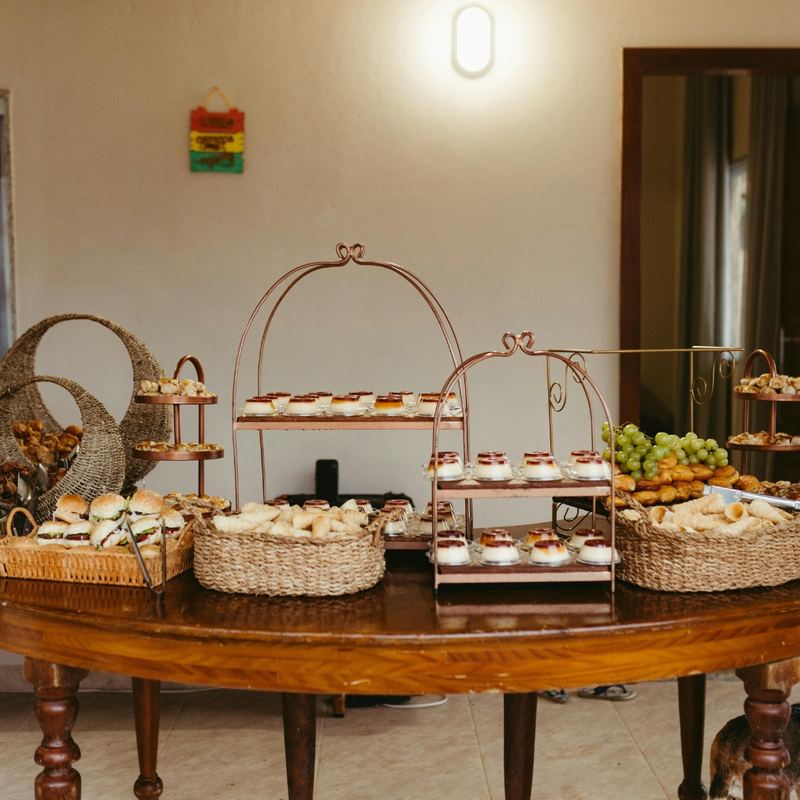
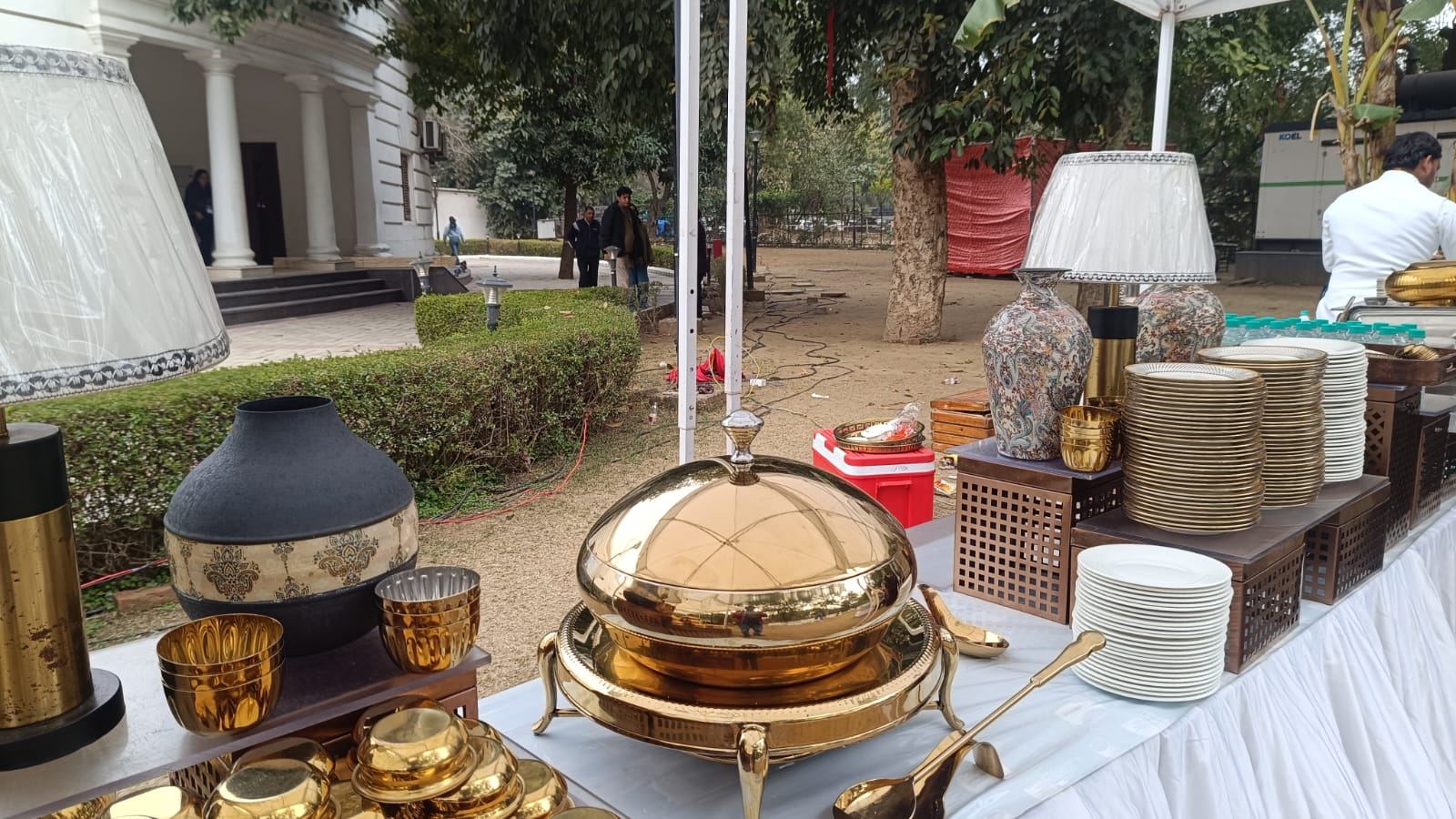
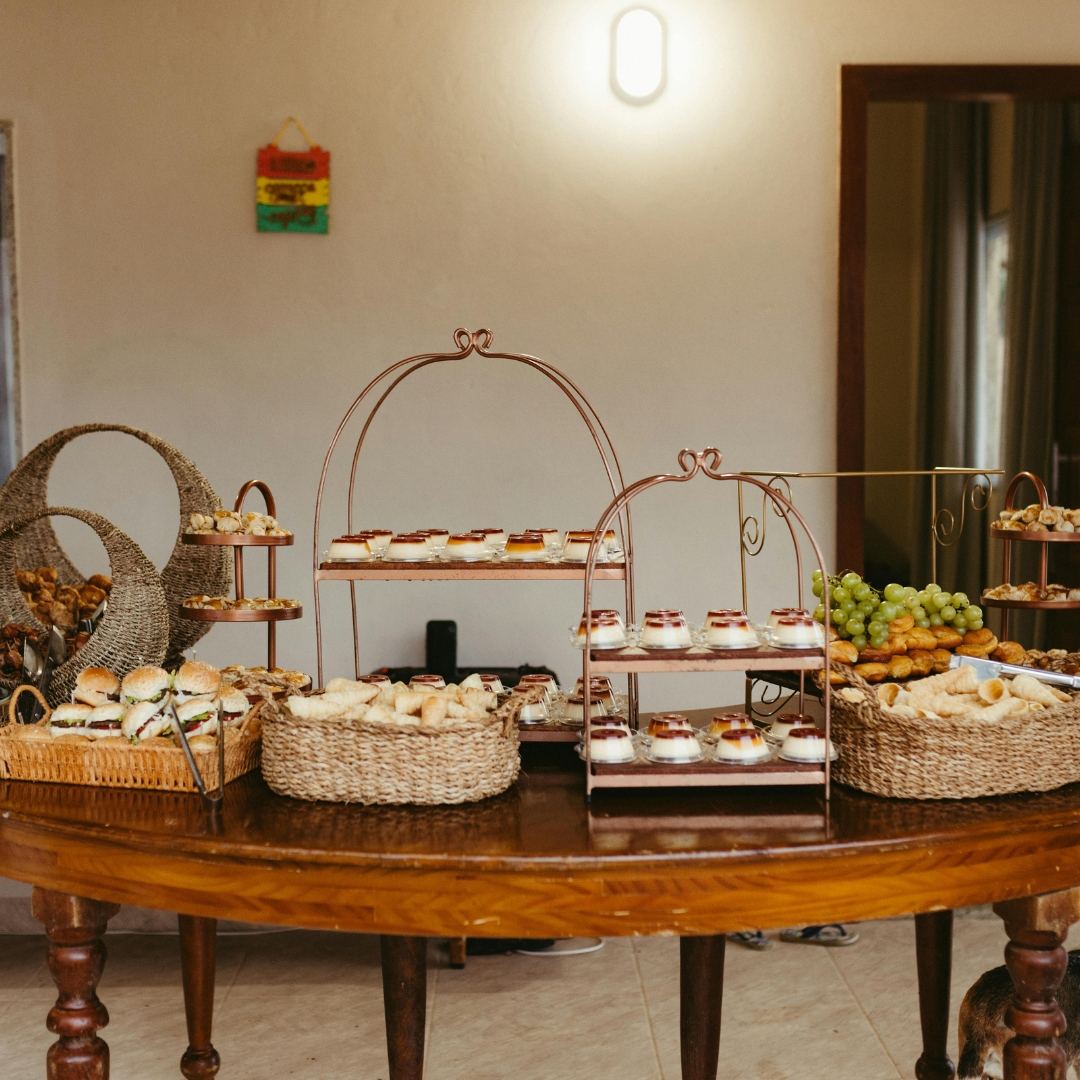
Live food counters — chaat, tandoor, pasta, dosa, jalebi and more — add theatre and keep food fresh. They also need skilled chefs, space and planning. Ask how many chefs will run each counter, how the counters are styled, and how they are positioned so queues do not block the dance floor or the entrance. Presentation should match your décor: crockery, serving ware, signage and counter design all contribute to the overall look.
3. Service that guests notice
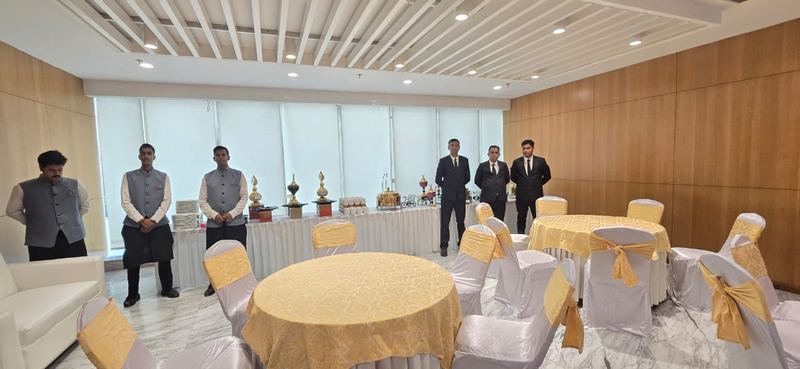
Good service is often invisible: plates cleared promptly, water refilled, elders served at their tables, and the bride and groom fed even when they are busy with photographs. Ask about the ratio of service staff to guests, how staff are dressed and briefed, and who will be the single point of contact on the day.
4. Food safety and kitchen standards
Luxury also means consistency and hygiene. Ask where food will be prepared, how it is transported and held at the right temperature, and how the caterer handles food safety at outdoor or temporary venues. Check that the caterer holds a valid FSSAI registration or licence.
Planning for guest count and service flow
Underestimating numbers is one of the most common wedding catering problems. Indian weddings often see late additions, and certain functions draw more guests than expected. Discuss with your caterer:
- How the final count is confirmed and how many days before the event.
- What buffer they plan for unexpected guests, and how extra plates are charged.
- Peak-time capacity — whether the number of counters and staff can handle most guests eating at the same time after the pheras or the reception entry.
- Separate service for VIPs, elders, vendors, drivers and staff, so that the main buffet is not overwhelmed.
A useful test: ask the caterer to walk you through the 30 minutes when dinner opens. A team that has thought this through will answer with specifics.
Catering multi-day wedding functions
Most Delhi NCR weddings now run across two to four days, sometimes in different venues. Each function has its own mood, and the food should reflect that.
| Function | Typical format | Things to plan |
|---|---|---|
| Haldi / Mehendi | Daytime, relaxed, often outdoors | Lighter food, chaat and street-food counters, plenty of cold drinks, shade for food stations |
| Sangeet / Cocktail | Evening, social, music-led | Passed starters, bar snacks, live counters that do not compete with the stage |
| Wedding | Largest guest count, ceremony-led timing | Food available before and after the ceremony, late-night service, family meal after the pheras |
| Reception | Formal, often a different guest list | Refined presentation, seated or semi-seated dining, dessert station |
Using one caterer across functions makes coordination simpler and avoids repeating dishes. Ask for a combined proposal that shows a distinct menu for each event.
Questions to ask before booking a wedding caterer
Your shortlist checklist
- Can we see a sample menu and photographs of setups you have done at venues similar to ours?
- What is included in the price — counters, crockery, staff, décor of stations, transport, taxes?
- How many chefs and service staff will be present for our guest count?
- Who will be our point of contact before and during the wedding?
- How do you handle Jain, vegan, gluten-free and allergy requirements?
- What does the tasting include, and how will feedback be incorporated?
- What are your requirements from the venue — kitchen space, water, power, permissions?
- What is your process if the guest count changes in the final week?
- What are the payment terms and cancellation policy?
Get the final menu, counter list, staffing and pricing in writing. Clear documentation prevents misunderstandings when you are too busy to negotiate details on the day.
Coordinating catering with the rest of the wedding
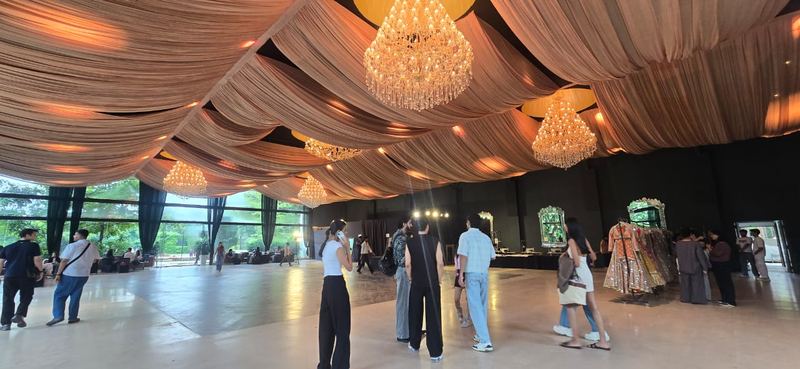
Catering does not happen in isolation. The caterer needs to work closely with your décor team, venue manager, wedding planner and photographers. Timings for dinner, the varmala, speeches and the baraat all affect when food is served and how long it must be held. Share your run-of-show with the caterer early, and make sure they attend the final walkthrough of each venue.
If you are working with an event management partner, ask whether catering can be managed under the same team. One coordinated plan for hospitality, décor and logistics reduces the number of handovers — and the number of phone calls you need to take.
How Lord's Grace approaches wedding catering
Lord's Grace Co. has 21+ years of experience in event management and catering, and brings the same planning discipline used for film productions and corporate events to family celebrations. Menus are designed around each wedding across 8 cuisines — Indian, Mughlai, Chinese, Continental, Lebanese, Rajasthani, South Indian and Thai — with live counters, dessert stations and catering for multi-day functions.
You can see the scope of our luxury wedding catering service, browse photographs in our event gallery, or read our frequently asked questions. If you are also planning a separate cocktail or private evening, our guide to planning a luxury private event may help.
Frequently Asked Questions
For peak wedding season (roughly October to March), most couples start shortlisting caterers four to eight months ahead, and earlier for popular dates. Book as soon as the venue and dates are fixed so the caterer can plan staff, kitchens and tastings around your functions.
There is no fixed rule. The number depends on guest count, how long guests will be eating, and the menu. A useful approach is to plan counters so that no single station has a long queue at peak time — your caterer should explain how they have sized the counters for your numbers.
Usually, yes. Haldi, mehendi, sangeet and the wedding day have different moods and timings. Varying cuisines and formats across functions keeps the food interesting for guests who attend several events.
A tasting is the best way to confirm flavour, spice levels and presentation before the event. Ask what the tasting includes, how many people can attend, and how feedback from the tasting will be incorporated into the final menu.
A clear quote should state the per-plate or package price, the full menu, the number of counters, service staff, crockery and presentation, any venue or kitchen requirements, taxes and payment terms. Ask for anything that is unclear in writing.